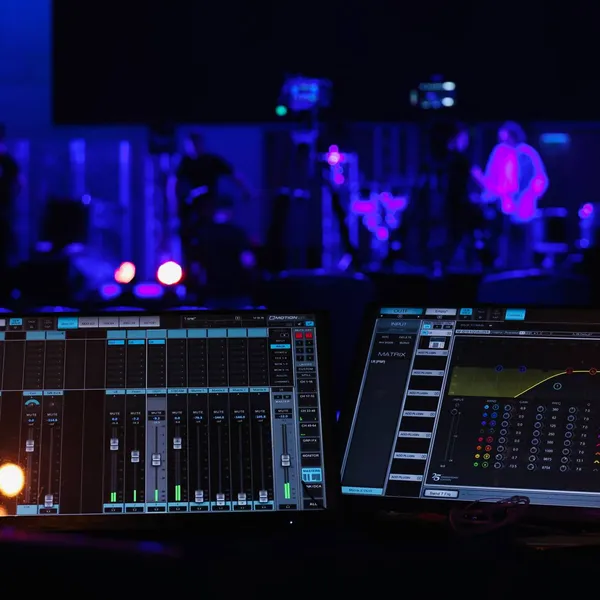
Technical direction
Planning the whole event. Venue drawings, stage and screen geometry, rigging points and load approvals, power, network, load-in schedule, contractors, safety paperwork and the documentation the crew works from.
Sound
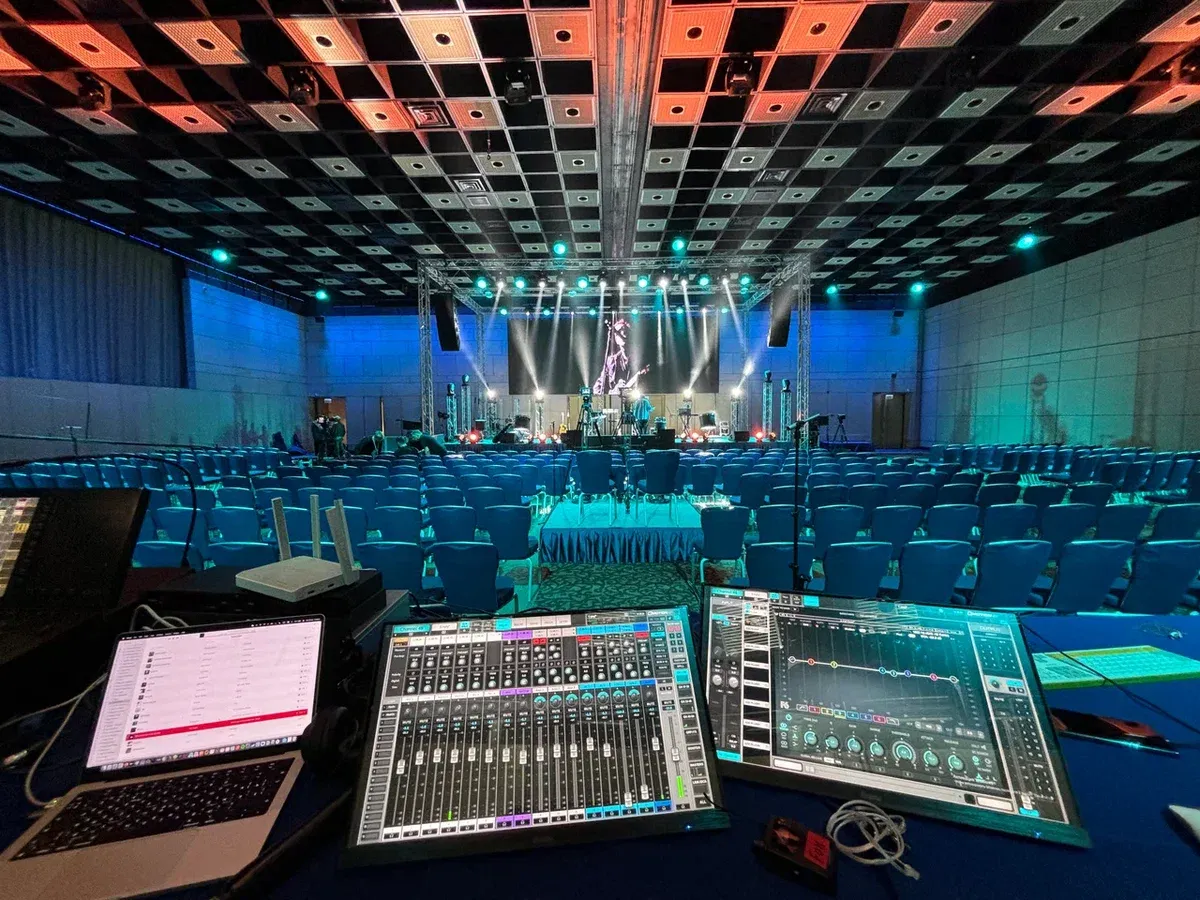
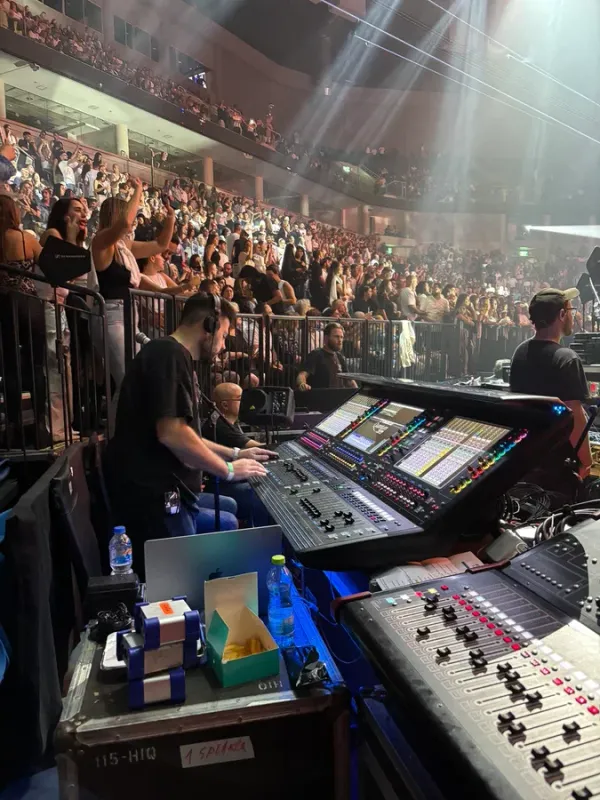
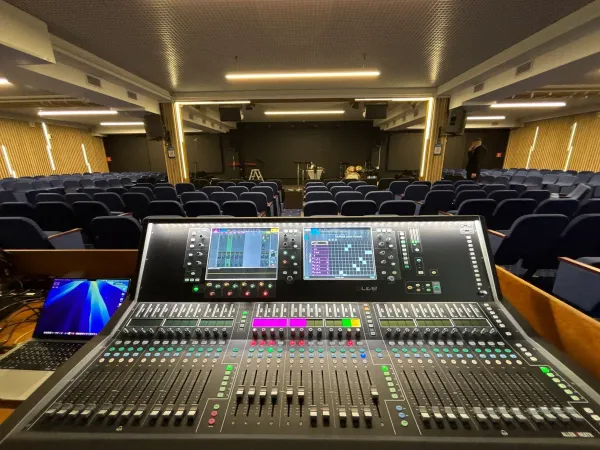
FOH and system engineering. Input list, patch, stageboxes, DSP and matrix. I split the PA into zones: mains, subs, front fills, delays, the broadcast feed. Plus frequency coordination and in-ears.
Lighting and show control
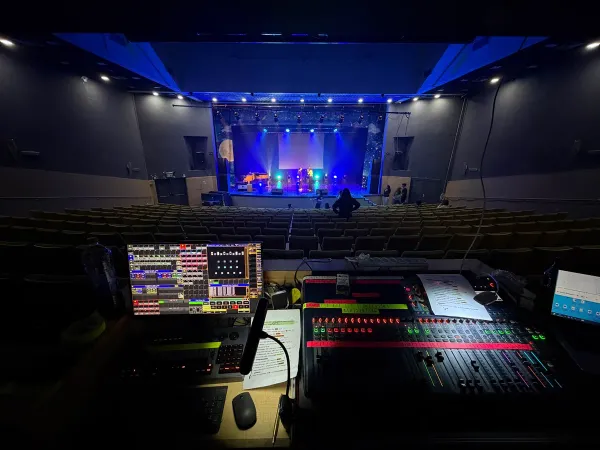
grandMA2 and grandMA3. I build the file so the next engineer can open it and find their way around. Timecode (LTC, MTC, network) ties playback, presentation, visuals and lighting together. The show repeats, but the operator still outranks the timecode.
Video and LED
ProPresenter, Resolume, Blackmagic. Multi-output systems where the wall, the projectors, the stage display and the stream each get their own feed. On the LED side: processors, receiving cards, mapping, module orientation.
Networks and integration
Consoles, processors and receivers are network devices now. So I design the event network as carefully as the audio patch. Dante, SoundGrid, managed switches, IP control, and the server side that automation runs on.
Development
When the tool I need does not exist, I write it. Console emulation, protocol bridges, show-file tools, camera control over PTP/IP. I work the protocols out from real traffic.